


Instructions
Gain valuable knowledge on pollution while learning tangible solutions as you have fun and learn new skills to reuse!

First and Foremost,
Thank You
Our environment needs us now more than ever! Without any change, it’s expected that our world will run out of natural resources by 2050!
We believe there is inherent value in our forests, our oceans and our natural world. We should protect these natural lands for future generations.
Some say the problems are too large to fix, but we disagree. The decisions we all make as individuals have a meaningful impact on our future. Together we can do this!

Our Goal
Gain valuable knowledge on pollution while learning tangible solutions as you have fun and learn new skills to reuse!
Most of us have many old items hanging around at home. T-shirts, towels and other fabrics that are pretty old, stained, or shirts that have lost their tension over time.
The volume of clothing Americans throw away each year has doubled in the last 20 years, from 7 million to 14 million tons. A factor that most people don’t ever consider is the impact our clothes have on the environment. Textile production requires significant amounts of chemicals, water, energy, and other natural resources. According to the World Resources Institute, it takes 2,700 liters of water to make one cotton shirt. And when consumers throw away clothing in the garbage, not only does it waste money and resources, but it can take 200+ years for the materials to decompose in a landfill. During the decomposition process, textiles generate greenhouse methane gas and leach toxic chemicals and dyes into the groundwater and our soil.
We are learning how to use our old items as a force for good.

Instructions
We work to keep things as simple as possible. If you have any questions, please get in touch with your event coordinator or reach out to “Kai” (WeHero Super Dog) in the lower-right corner of this page.

Woven Baskets
Step 1: Gather the needed materials
- 2 cardboard cereal boxes
- Or 2 cardboard food boxes, roughly 8 inches wide and 12 inches in height.
This can also be made with 3 tetrapack milk-sized cartons - A ruler
- A pencil
- Pair of scissors
- Double-sided tape or glue (if you don't have either, you can also use a needle and thread)

Step 2: Cut the pieces
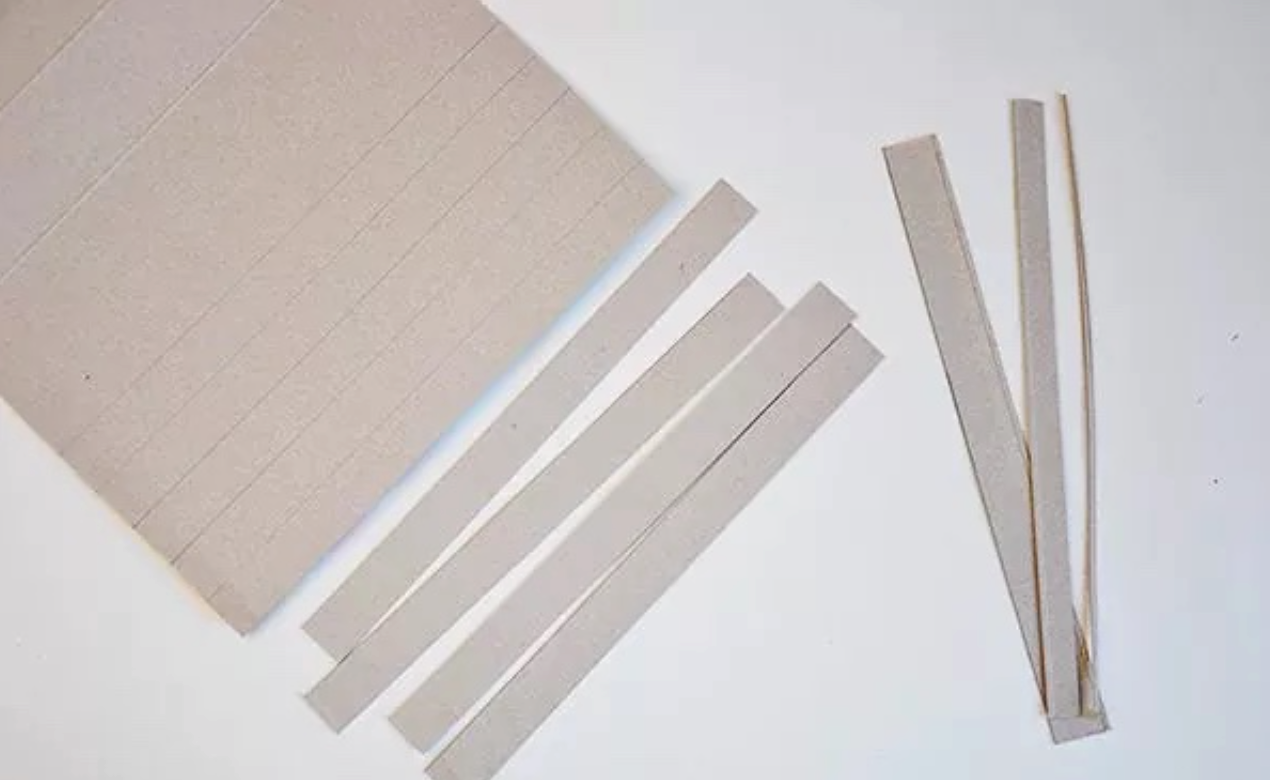
1. Open and cut off the flaps of the cereal boxes. Use the pencil and ruler to mark strips 1 inch (2 cm) apart. Cut out the strips. This will give you 11 pieces, 17 inches long. Repeat this with the 2nd box, so you will have 22 pieces in total.
Step 3: Weaving The Bottom
Divide them into 3 sets: 2 sets of 7 (this will make the base of your basket) and 1 set of 8 for building the sides.
Start overlapping four strips in their centers. Then add one strip at a time, making sure to alternate which strips it goes over or under. As you weave the strips, take a moment and adhere the strips together at each corner of your base.

When you've woven all 14 strips, fold the edges up. You have successfully made the base of your basket!
Step 4: Weaving the sides
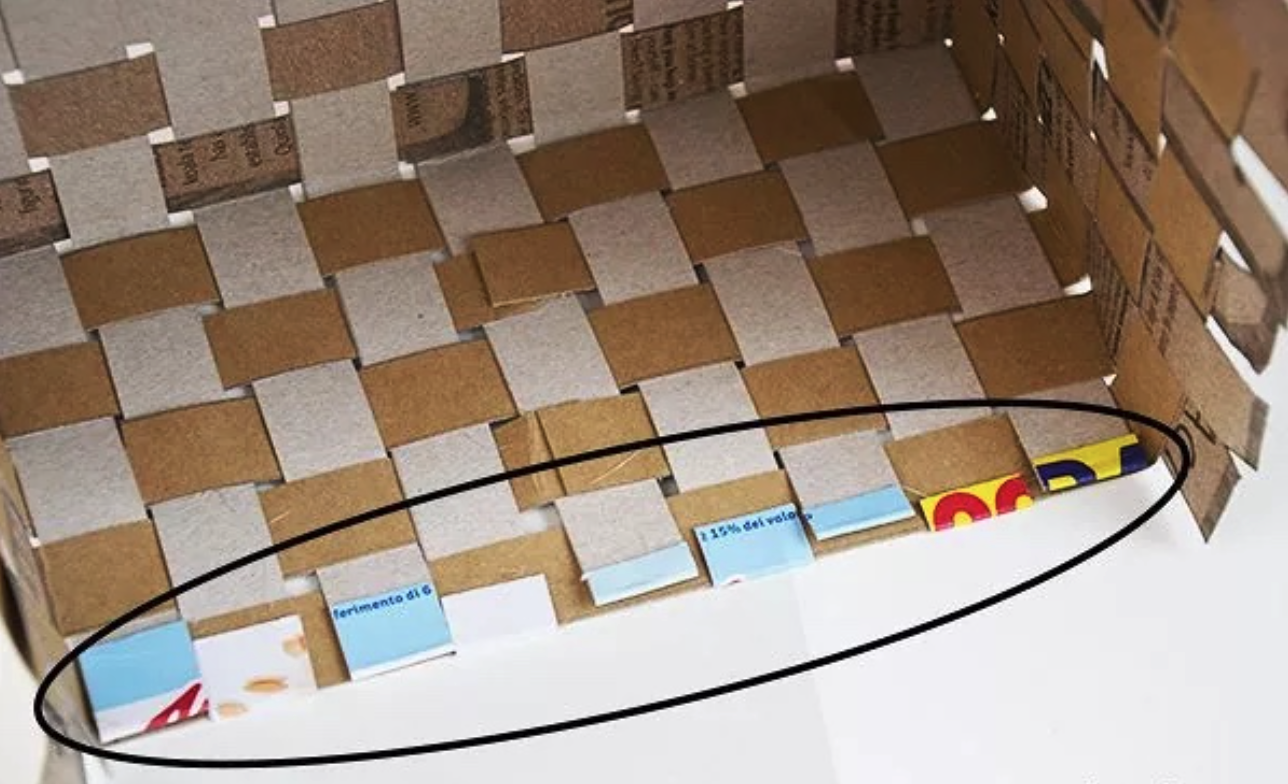
Now to create the walls of your basket! Grab a new strip and secure it to the inside of two newly folded strips. This is preferably an end strip, so you will be able to weave the strip through the folded strips. Continue weaving the strips through. When you arrive at a corner, fold the strip to create an edge, and secure it to the first strip on the new side.

If you have used the full strip, all good! Simply grab a new one, secure it to the last strip and keep weaving.
Work your way around the whole basket. Once you arrive back at the starting point, secure the end piece.
Repeat the process as you continue your way up the basket sides. Ideally, the basket should be the height of 5 strips.
Once you have reached the top, fold over (trimming if necessary) the tops of the strips sticking out, so that they go inside the top of the basket, and glue them down.
.png)
Step 5: Final steps
Use the last strip to run around the top inside of the basket, covering up the tips of the folded strips. Glue this last interior strip in place.
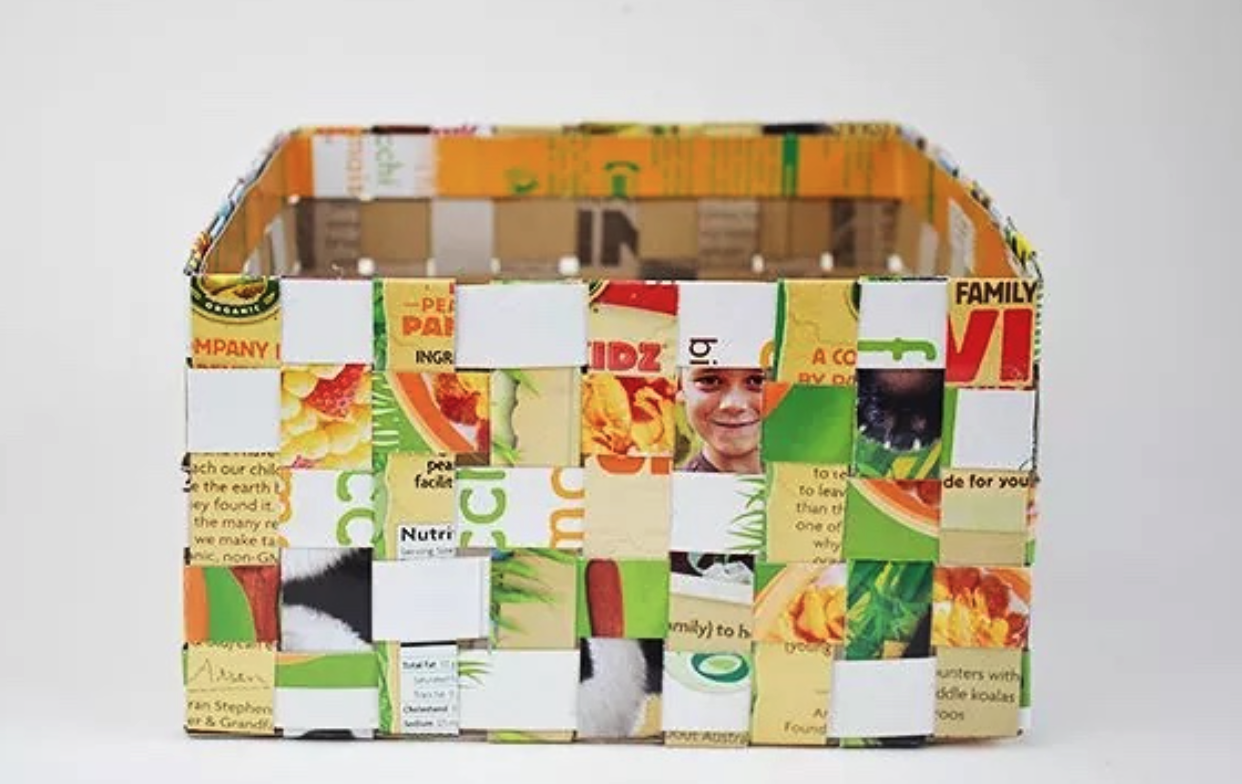
Woohoo! Your basket is complete! Time to organize :) Want another way to use tetrapaks? Check out this video below!
Bath Mats
Step 1: Gather the needed materials
- 3 to 4 bath towels
- Pair of scissors
- Needle
- Thread
- Pins
Step 2: Cutting
Cut the bath towels into strips. We make ours 3 inches wide, but you can make it as large or as small as you want; just make sure all lengths are the same width.

Step 3: Sew together
Line up three strips. Cut off the border of the towels, if necessary. Pin and sew together. Remove the pin after sewing. Fold the sides of one strip toward the center, then fold in half—pin to secure and repeat down the entire length of the strip. Repeat with the other two strips.
Step 4: Braid
Braid the three strands, removing the pins as you go. When you reach the end, sew on more strips and continue until you run out. Sew the back to secure. Twist the long braided rope into a coil. Sew together.
You've successfully completed your reduce projects!
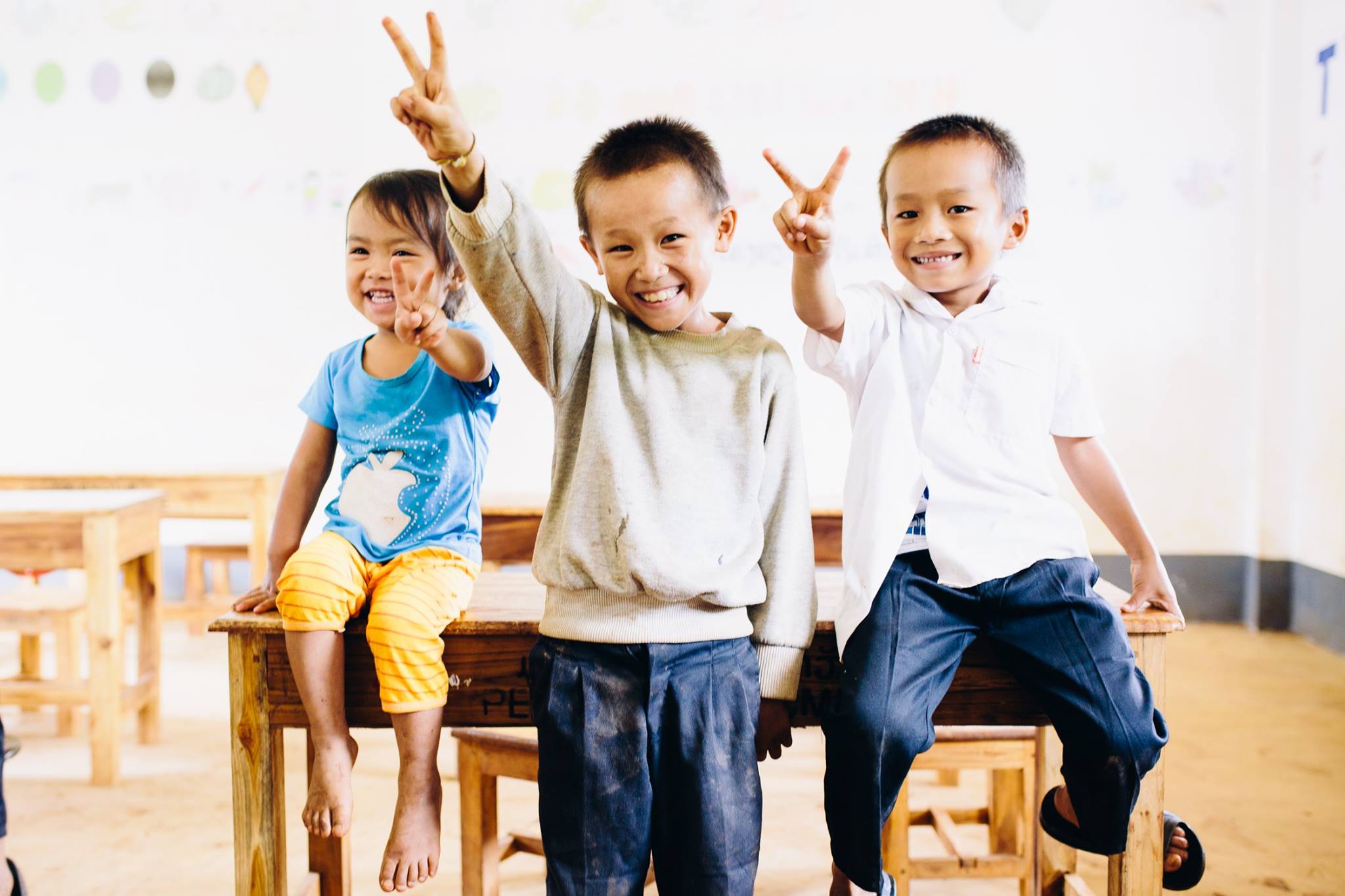
We’d love your thoughts!
Have 32 seconds? We always want to make these experiences better and would love your feedback.
Recycling is hard so we made this resource list to make it easier!
We build our volunteer events to be as environmentally friendly as possible. Whether it is offsetting the carbon emissions of the shipping process, using recycled cardboard for the boxes, or relying on algae based dyes, we’ve made conscious steps to ensure we’re doing right for our world.



Have questions about your experience?
We’re here to help!
Get in touch with us here or give us a call. Feel free to also chat with Kai and he’ll fetch a member of our team to help!
